May 17, 2013

Third Ear Band on air in France at Robotouffe Radio...


TEB UBER ALLES!, dear maniacal alchemical fans!
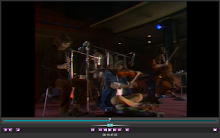
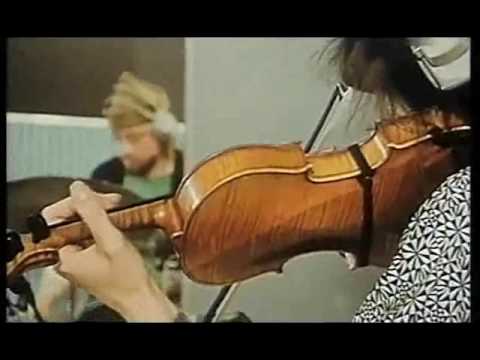
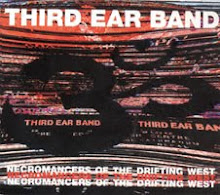
TEB is alive and well and on last April 30th, 2013 French Web radio Robotouffe aired the infamous "Fleance".

You can listen to the show at http://www.mixcloud.com/robotouffe-radioshow/robotouffe-du-30042013/ with tracks, among the others, played by Chuck Berry, The Melvins, Black Flag... "Fleance" is at 14'03"...


no©2013 Luca Ferrari (unless you intend to make a profit. In which case, ask first) 

May 01, 2013

A short interview with Dave Harries, sound engineer of the "Macbeth"'s soundtrack.


Dave Harries was the sound engineer of TEB's "Macbeth" soundtrack recorded at George Martin's Air Studios (London) in the second half of 1971. Quite accidentally, surfin' on the waves of the Web I've been so lucky to meet him, he's been so kind to accept a short interview about his past... 
Here's this Special Thing.

                              Dave Harries on December 19, 2011 (photo by David McSherry)

Describing the Macbeth's soundtrack project to the press ("Sounds" magazine) in 1972 Glen Sweeney said: "We originally were going to use a small dubbing theatre at Air and we thought we would rehearse the film score, but on the first few clips - they only sent the movie on a clip at the time, you see - things went to well that we eventually sent the dubbing theatre up and plugged it into an eight-track and it became the original film soundtrack, part from overdubbing... (...) The way we did it mainly was by viewing the clip that they needed music for and them maybe somebody would have musical idea which we would try out, and if nobody had any ideas then we would hope for the best and try again. And it worked nearly one hundred per cent. I mean, the ideal way would have been to get someone to write the whole score and hire a bunch of studio musicians to play it". Is this description correct?
"Yes, they did view the clip and then compose the music on the spot to go with each scene. We did it one clip at a time so at times to me the music can seem a bit disjointed. Roman Polanski used to come in and review the work. We sent the music mixes to Shepperton Studios to lay them up with the film as we completed them. Often Shepperton would label them wrongly so we would sometimes show scenes with the wrong music as a result. Very confusing. Roman Polanski used to get annoyed about this! We worked in Studio 4 which was designed as a dubbing theatre with film projection facilities. This notably was one of the first movies to use Dolby on the soundtrack".

How did you meet the band? Did you know them before to start the recording sessions? 
"I first met the band because they started the project with our film recording engineer Jack Clegg but he didn't like working with multitrack recording so he asked me to take over the recording along with assistant Bill Barringer".

Can you tell us your career at that point?
"I started work at EMI Studios in 1964 as a technical engineer staying there for 6 years and working with all the famous bands of the era including The Beatles, Pink Floyd, The Hollies, Beach Boys and many more. I left in 1970 to join George Martin helping to set up the new Air Studios in Oxford Circus".


                                   One of the rare photo taken at the Macbeth recording sessions.

Which was your exact role in the recording process at Air Studios?
 "I was the recording engineer responsible for the sound and the organisation of the sessions. I recorded the band to multitrack locked to the picture and mixed the music down to two track magnetic. Also I mixed and edited the soundtrack album".
Do you remember which was the equipment you used for recording the music?
"I was speaking with Bill Barringer yesterday about the equipment. We think we used a Studer A80 8 track machine the a 50Hz pulse on track 8 to synchronise with the film.
We mixed down to stereo or maybe three track to an Albrecht film recorder. The projectors in that room were Phillips. Microphones mostly would have been Neumann U87 or U67, maybe an STC 4038 on drums.The whole track was Dolbied and we had regular visits from Elner Stetter of Dolby throughout the recordings".
What can you tell about the condition of the band in the studio (I mean if they were competent about playing and recording, if they used to get drugs, if they were serious worker...)? 

                                       The TEB appearing on the movie...
"The band worked very well in the studio and were very creative and constructive in forming the musical passages to accompany the film. Don't remember any drugs. At the time they weren't tolerated in the studios".

In a recent interview with myself, Paul Buckmaster stated: "Glen, Paul, Richard and Denny trusting me with my suggestions. For example, I actually wrote the dreary "Witches Song", which we played, and sang. The singing was done by the five of us; Roman wanted it to be "kind of disgusting"… We did a certain amount of overdubbing, to create a more dense texture in places, with me and Richard making clustery string harmonies… I think the End Titles is one of the better pieces in the score; Denny contributed a lot to that, and a great driving pulse from Glen! I believe Denny composed "Fleance's Song" with Paul… but we're all credited as co-writers, which was Glen's democratic, egalitarian virtue". Was the role of Buckmaster so decisive into the composing and recording process?

"Paul Buckmaster was an integral part of the band, particularly contributing to the more modern sounding pieces which were almost becoming classical musically".
 
What do you remember about the recording of the "Fleance's Song", probably the most known track of the soundtrack? I know that Glen and Paul hated it and it is confirmed by Denim Bridges that recently revealed me: "Glen and Paul hated that track because it didn't fit in with TEB concept. It was composed for the movie and it was composed by me alone. The words were provided to me so I, of course, just wrote the melody and chords. The turn around where I repeat the line as a sort of refrain was my trick that I often use(d) and using the minor chord was cool I think. The rest of the band improvised the arrangement in TEB style as best we could within the ridged structure. Anyway that song was the start of my demise with TEB as that's the way I wanted TEB to go".
"Fleance's Song was recorded by Jack Clegg and Bill in  Studio 2 at Oxford Circus. I mixed it with Bill in Studio 4 along with everything else. It was so good and very commercial that at the time we all agreed that it should be released by EMI as a single but the record company didn't agree".

Which was the real contribution in the studio work of George Martin?
"To my knowledge George didn't have anything to do with the recording of "Macbeth"".
 
Had you been involved with the film premiere in London? Do you recall something?
"Didn't get an invitation to the premiere".

Have you got any stuff, photos or something else about that experience that you wish to share with the Archive's readers?
"Unfortunately I don't have any pictures or anything. I will do some research however.
I hope that the above is of help.
All the best, Dave Harries".

  
Dave Harries (on left), after receiving his Lifetime Contribution Award in 2009 from Sir George Martin and Ken Townsend (on right)

no©2013 Luca Ferrari (unless you intend to make a profit. In which case, ask first)

April 30, 2013

An old radio show with the TEB available in podcast.


"Hello Luca,
Don't know if you remember me but my name is Ed Wilkins, and I hosted a progressive rock show on Stroud FM in 2011. I did a show covering the Third Ear Band and we conversed over for a while but it kept not going out and we eventually lost touch. I ended up leaving the station not long afterwards and move on to other things.

The reason I am writing to you after so long is due to the fact that I recently decided to return to the station and this time also got a Listen Again page, so until I have more shows I have decided to put up some of my old ones - including the Third Ear Band show!

You can listen to all of my shows on here - I intend to play more Third Ear Band on later shows so you can keep an eye out for them!
http://podcasts.stroudfm.co.uk/index.php?cat=An%20Hour%20of%20Prog%20with%20Ed%20Wilkins

The Third Ear Band show itself is this one:
http://podcasts.stroudfm.co.uk/index.php?id=1282


I deeply apologize once again for the problems encountered the show and hope this makes up for it. It will remain on the page until I have more shows to put up (eight hour limit) but that won't be for a while yet and I can always re-upload it. Hope you are well.
All the best
Ed Wilkins".

So thanks a lot Ed for putting the Third Ear Band music on air again!

 no©2013 Luca Ferrari (unless you intend to make a profit. In which case, ask first)

April 24, 2013

Glen Sweeney's Hydrogean Jukebox and TEB's "Magic Music" reprinted in England.


After TEB's "Magic Music" reprinted last year for English indie label Floating World (with that Looker's awful cover), just at the beginning of 2013 Voiceprint has reprinted the Glen Sweeney's Hydrogen Jukebox album with the title "Songs from the Hydrogen Jukebox".  
Same song list and same Carolyn Looker's controversial cover...


Stewart Mason on cdUniverse Web site about the record:

"(...) The results sound a bit like a somewhat more song-oriented version of Angels Egg-era Gong: The groove is paramount, but in a structured format that, in spots, is recognizable as the kind of post-new wave/art-pop music that, say, Simple Minds was doing around the time of New Gold Dream. That connection to '80s pop is cemented in the album's last three songs, recorded by a reunited (and newly electronic) Third Ear Band in the early '90s and sounding like outtakes from Japan's later records, especially on the worldbeat-influenced "Behind the Pyramids." 

no©2013 Luca Ferrari (unless you intend to make a profit. In which case, ask first)  

April 17, 2013

Unknown 1991 Ursula Smith's collaboration revealed!


Discovering few days ago the interview with Ursula Smith (Pank) in this Archive (http://ghettoraga.blogspot.it/2011/07/life-takes-so-much-time-interview-with.html), English musician Ed Wenn writes: 

"It was great reading this interview with Ursula as it helped fill in her back story to a great extent. Ursula was kind enough to record some cello and a little violin on a couple of tracks for my band, Big Ray, back in 1991. I knew she had been in the Third Ear Band, but at the time knew little about them or her beyond the fact that she was an acquaintance of my ex-girlfriend's mother (who was herself a violin teacher). So, like I said, it's great to find out more :-) 

For the record, Ursula was very, very generous with her time and her talent and contributed some beautiful cello to our songs. Considering that we called her out of the blue and gave her almost no notice, it's astonishing she didn't tell us to go and take a hike. She's credited as Ursula Pank on the album. For the completists among you the details are here: http://www.discogs.com/Big-Ray-Naked/release/2446276".
 
The Big Ray

Ursula played violin and cello on three tracks of the album (titled "Naked" and published on CD and LP format by City Slang in 1992) - "Windfall", "Missing a train" and "Carousel" - that you can listen and download free at http://mp3twister.com/Big-Ray.html

no©2013 Luca Ferrari (unless you intend to make a profit. In which case, ask first)  

March 29, 2013

Japanese reissues in CD format of original Third Ear Band's albums!


Japan EMI-Harvest has recently reprinted the first three Third Ear Band's albums in a limited press CD format at the cheap prize of 1143 yen (9.47 euros - 7.98 pounds - 12.14 dollars).
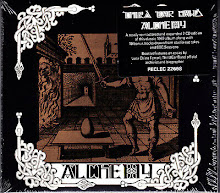
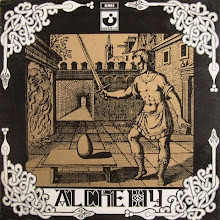
Published on February 27, 2013, the label has sent to the shops "Alchemy", "Third Ear Band" and "Music from Macbeth" with the original artworks and the famous Japanese strip, as you can see on the pictures of the "Alchemy" edition here below:


 These are the details:

"ALCHEMY" (EMI Music Japan TOCP-71515)
"THIRD EAR BAND" (EMI Music Japan TOCP-71516)
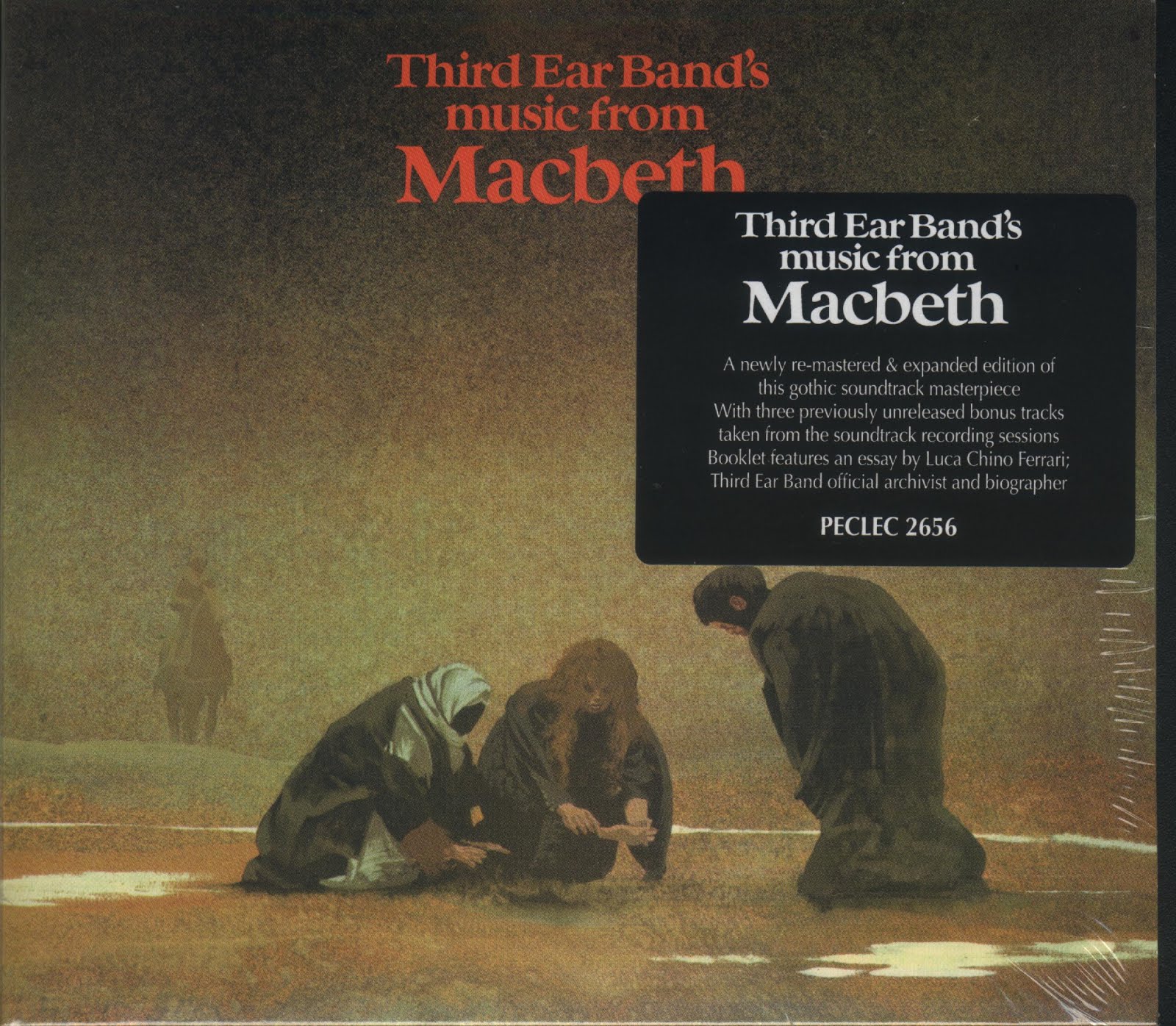
"MUSIC FROM MACBETH" (EMI Music Japan TOCP-71517)

It would be interesting to check the audio quality, if some engineers have worked on the original masters, expecially for the "Macbeth" soundtrack available for years on CD just in that awful BGO edition...

Anyway, all things considered, a must just for compulsive kollectors! 


You can buy the CDs at http://www.cdjapan.co.jp

no©2013 Luca Ferrari (unless you intend to make a profit. In which case, ask first) 

March 23, 2013

Dave Tomlin analyzes two his compositions from "The Magus" (1972).


I've asked Dave Tomlin to analyze his old compositions for the TEB's THE MAGUS album, "New Horizon" and "The Phoenix" (actually a poem declaimed by himself), and he has been so kind to do it for Ghetto Raga Archive. 
As everyone knows, THE MAGUS was recorded in 1972 by a line-up with Sweeney (drums), Minns (oboe, recorders and hammond), Mike Marchant (electric guitar and vocals), Simon House (electric violin, VCS3 and piano), Dave Tomlin (bass and flute) and Ron Kort (percussion, doom piano). The late Mike Marchant composed the majority of tracks inspired by Tarots. Recorded just in five days, rejected by Island Records, the album was lost in the vaults, re-discovered and published for the first time in 2004 by English Angel Air thanks the late sound engineer Ron Kort.
Here's Dave's writing about his tracks.

  
New Horizon (music & lyrics by Dave Tomlin)
There are four significant verses in the lyrics of this song. 


1) ‘We are standing on, our own horizon’

This, the first line of the song although intriguing, is in fact nonsense.
For those whose English is a little weak, the horizon is the visible line between the earth and sky. Sometimes this can be quite near depending on the kind of landscape. At other times it can be at a great distance (while at sea for instance).
Nevertheless, to stand on one’s own horizon cannot be done and were it to be accomplished would require shifting to another dimension. However, the concept leads to another seeming impossibility which is revealed in the second verse.

2) ‘Paths that lead this way, by-pass yesterday’.
I wrote this song around 1966 when the idea of ‘now’ was inspiring the minds of the hippies of that time. 'Baba Ram Das’ (Richard Alpert) book, ‘Be here now’, was required reading and the idea of abandoning the past in this quest had much power. This was the notion that launched the ‘happenings’ and spontaneous events that were the signature phenomena of the time. On a more personal level the idea also supported the idea that the personal ‘self' belonged to the past, and freedom from that self lay only in the present moment. Therefore, to by-pass yesterday was an invitation to a new kind of freedom.

3) ‘It’s made more or less, out of nothingness but that doesn’t mean, it cannot be seen’.
Quantum physics had of late revealed the insubstantial nature of matter which, although obtuse to the point of almost non-existence is still, nevertheless, commonly perceivable by the human eye.
Some forms of Buddhism also speak of this paradoxical fact.

4) There’s no reason why, we should have to lie/die. If the Pope goes mad, we’ll be very glad/sad’.
I realised when writing these lyrics that they might be controversial amongst those of a particular religious persuasion and therefore, as above, considered some alternatives. However, I left this decision to the very last moment, in fact while I was singing it, and, the times being what they were, I was seized by a bolshie spirit and went for ‘lie’ and ‘glad’.
Catholics of course are excused from adopting this view, but for those outside that mindset such an affliction to the Holy Father would seem to be of great benefit and undermine the credibility of that teaching, particularly for children who are being programmed into such a Satanic doctrine. For instance, in the view of that perfidious teaching to miss mass on Sunday is a mortal sin, and should that sinner die without seeking forgiveness in the confessional, will be cast into Hell for all eternity.
Enough to terrify and give nightmares to any sensitive and vulnerable child. 

               A beautiful page from "Conference of the birds" by Farid Ud-Din Attar (1177).

The Phoenix (music and poem by Dave Tomlin) 
This song also written in 1966 was based on and inspired by
‘The Conference of the Birds’. A 12th century Persian poem by Farid Ud-Din Attar.
‘Come you lost atoms to your centre draw and be the eternal mirror that you saw Rays that have wandered into darkness wide return and back into your sun subside’.
etc.

The birds go on a journey to seek their King, the ‘Simoch’ otherwise the Phoenix. 

"Conference of the birds" (detail), from Attar Mantiq al-Tayr (1493)

no©2013 Luca Ferrari (unless you intend to make a profit. In which case, ask first) 

March 15, 2013

Lot of TEB tracks for free listening and download at Hamster.net


With the "Listen and download tons of mp3 for free" quip TEB's fans can listen and download a lot of the band's tracks at the page 
http://mp3hamster.net/muz/third%20ear%20band
on MP3 Hamster Web site.

no©2013 Luca Ferrari (unless you intend to make a profit. In which case, ask first)

March 08, 2013

A German band called Ghetto Raga...


"The name is taken from the second track "Ghetto Raga" on the first 1969 album by british THIRD EAR BAND "Alchemy" and also is program: instruments usually played in classical music playing free improvisations fenced in by simple and monotonous hand drum rhythms - usually just one ongoing hypnotic rhythm per piece. Glen Sweeney, mastermind and drummer of TEB, later called their pieces "electric ragas"".

Thomas Zunk

Here's the description German musician & advantgarde composer Thomas Zunk uses to describe his music on his Soundcloud profile (https://soundcloud.com/ghetto-raga and https://soundcloud.com/ghetto-raga-2), a miner of experimental music with clear references to the Third Ear Band's poetics...
His Berlin based free improvising project called Ghetto Raga started in  1993 and through various different line-ups he recorded very interesting tracks with the intention of creating a synthesis between freely improvised music and the classical gamelan styles of Indonesia. Ghetto Raga's pieces sometimes evoke spherical, metallic landscapes; some others position hypnotically pulsating, monotone grooves under a virtuoso violin. 

As usual, listen to these tracks and make a your opinion about the real connections with Glen Sweeney/Paul Minns' music... 


no©2013 Luca Ferrari (unless you intend to make a profit. In which case, ask first) 

February 20, 2013

"A valuable lesson, but not one that I would ever wish to repeat". A letter from ALLEN SAMUEL, Third Ear Band's violin player, on his experiences with the band.


Quite unexpected, I've received a handwritten letter from Allen Samuel, as you remember the first Italian tour Third Ear Band's violin player.
At that time, living at the Cambodian Embassy of London, he was a Dave Tomlin's friend and it was just Dave to suggest Glen to get Allen in the band: from a young age he was always on the fiddle and it seemed just the right choice.
The first TEB Italian tour, in some way, was a little nightmare, because as the same Allen remembers "Paul and Glen were falling out and Glen was giving me a very hard time. Before we even arrived we were all emotionally drained and physically exhausted from the long car drive from London".
Anywway, as Allen admits, that experience with the TEB "taught me a valuable lesson, but not one that I would ever wish to repeat"...
Here's the original letter, another important tile of this Archive.

 
                           TEB on stage at Umbertide, first Italian tour on September 9th, 1988:  
                             (L-R) Allen Samuel, Mick Carter, Paul Minns and Glen Sweeney.

"Dear Luca,
thanks for your letter, and many apologies for taking so long to reply. In the interim I have managed to lose your letter amid the chaos on my table but I can remember most of your questions I haven’t been sure how to answer them without adding a sour and perhaps unnecessary element. With members of the band now deceased, I didn’t want to add a posthumous unpleasantness. But on reflection, I’m sure you would prefer a truthful account of my experience with the Third Ear Band.


                                     The Allen Samuel's letter.
 

There was one thing that I really enjoyed and that was the inspirational playing of Paul. In a way, the rest of the band were a rhythmic background to the stories that he told on the oboe. When I joined the band Glen and Paul were the only original members and the sound was very different from the earlier incarnations of the band. We had just a few play-throughs in my room in London [at the Cambodian embassy] before coming over for our first Italian trip. I don’t think we had enough time to find a new integration between the players, but it could have been a lot worse.
Before joining the band I hadn’t even known of its existence and had no idea of what to expect beyond stories I heard about wild madness an nervous breakdowns during previous tours of the band. Though classically trained, I have always loved making up my own music as I went along. It seemed that the Third Ear Band might be a valuable opportunity to collaborate with others in a spirit of free improvisation. A major problem with the band was emotional dischord between its members. For myself, an emotional harmony between musicians is essential for satisfactory music making. Music is a language of the feelings expressed in sound, and the feelings between the players are the raw ingredients of that language. I don’t enjoy bad feelings between people and I find playing music in such an atmosphere a nightmare. 


                            Cremona (September 1988), first Italian tour: L. Ferrari, Glen Sweeney,
          Allen Samuel, Mick Carter, Paul Minns, Kathryn Ade (Minns' wife) and Elena Blasi.

In our first tour in Italy, Paul and Glen were falling out and Glen was giving me a very hard time. Paul was so distressed that he left the band.
Before we even arrived we were all emotionally drained and physically exhausted from the long car drive from London. We arrived at the hotel at dawn and got no sleep. I have no idea how we were even able to stand up, let alone play, in the first gig. We were ill-prepared in every sense, and the most I can say in that my experience with the Third Era Band taught me a valuable lesson, but not one that I would ever wish to repeat.

I was never the less glad to meet you and appreciated your kindness and enthusiasm. All I can say is that I am sorry this is not a more positive reply to your questions. I am still playing and engaged in some unusual and interesting musical projects.
All best wishes, 
Allen”.


          Samuel with the TEB at Vinci (Florence),  July 2nd, 1989 (photos by  Lucia Baldini).

no©2013 Luca Ferrari (unless you intend to make a profit. In which case, ask first)